
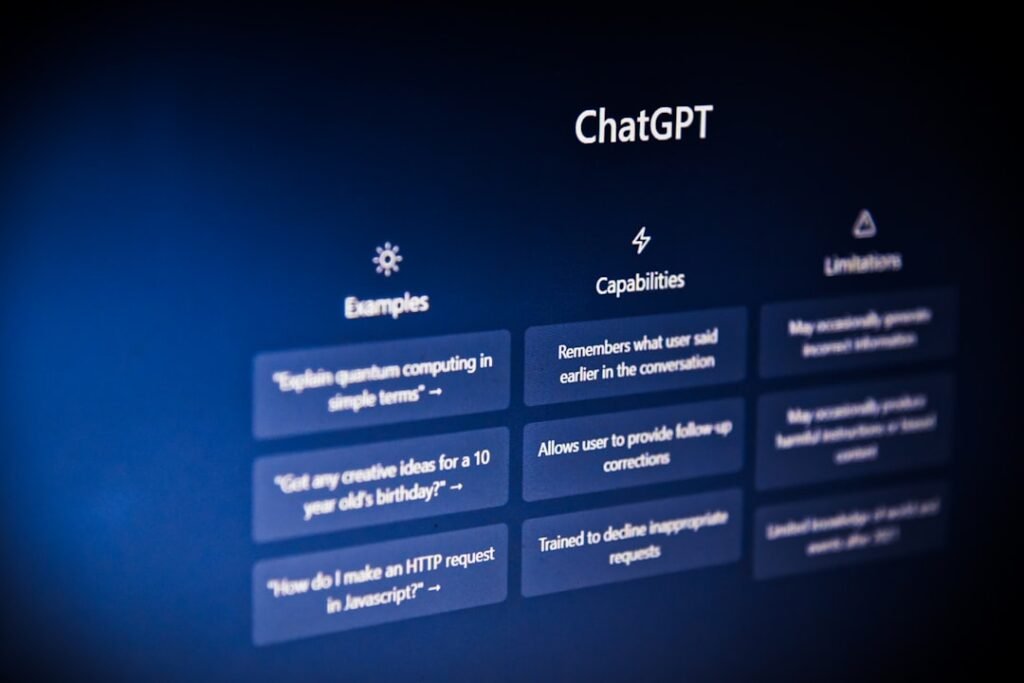
In 2026, the AI assistant market has settled into three dominant players: ChatGPT from OpenAI, Claude from Anthropic, and Gemini from Google. All three are genuinely capable. All three have improved dramatically from their earlier versions. And all three are meaningfully different from each other in ways that matter for specific use cases.
The honest answer to which AI is best is: it depends on what you are doing. This guide breaks down each platform’s real strengths, real weaknesses, and the use cases where each one delivers the most value.
ChatGPT (OpenAI): The Most Versatile
ChatGPT remains the most widely used AI assistant in the world, and for good reason. The breadth of its capabilities across different task types is unmatched. GPT-4o — the model behind ChatGPT Plus — handles coding, data analysis, creative writing, image generation, and voice conversation in a single interface.
Where ChatGPT excels:
Coding and technical work is ChatGPT’s strongest domain. The model writes, debugs, explains, and refactors code across virtually every programming language with accuracy that genuinely accelerates developer productivity. For non-developers, ChatGPT can write scripts, formulas, and automation code that accomplishes practical tasks without requiring programming knowledge.
Data analysis through the Code Interpreter feature (now called Advanced Data Analysis) allows users to upload datasets and ask questions in plain English. ChatGPT writes and executes the Python code to analyze the data and returns charts, summaries, and insights. This capability brings data analysis to non-technical users in a way no prior tool achieved.
The plugin and GPT ecosystem is the broadest of any AI platform. Custom GPTs built for specific purposes — resume writing, legal research, recipe generation, customer service — extend ChatGPT’s capabilities in ways that make it genuinely customizable for specific workflows.
Where ChatGPT struggles: Very long documents push the context window limits of standard plans. Complex instruction-following on nuanced tasks occasionally produces responses that miss key requirements. The free tier (GPT-3.5) is significantly less capable than the paid tier (GPT-4o), creating a meaningful quality gap based on subscription status.
Claude (Anthropic): Best for Writing and Long Documents
Claude has established a clear identity distinct from ChatGPT: exceptional performance on writing tasks, superior handling of very long documents, and a distinctive communication style that many users find more natural and direct than other AI assistants.
Where Claude excels:
Long-form writing is Claude’s most consistent strength. Articles, reports, essays, and business documents produced by Claude have a quality of prose and logical structure that consistently outperforms ChatGPT for pure writing tasks. The output reads more like a thoughtful human writer and less like a content generator. For businesses that publish written content — blog posts, whitepapers, newsletters — Claude’s writing quality is a genuine differentiator.
Document analysis at scale is Claude’s most practical business capability. The context window handles documents of 100,000 tokens or more — equivalent to a full-length book. Users can upload entire contracts, research papers, financial reports, or legal documents and ask questions about the content with high accuracy. This capability eliminates hours of manual document review for professionals who regularly work with dense written material.
Instruction following on complex, multi-part tasks is consistently stronger with Claude than other models. When you provide detailed, specific instructions, Claude tends to honor all of them rather than prioritizing the most prominent elements and dropping nuanced requirements.
Where Claude struggles: No image generation. Weaker coding performance than ChatGPT for complex technical tasks. Less extensive integration ecosystem. No free tier with the full model capability.
Gemini (Google): Best for Google Workspace Users
Gemini’s clearest competitive advantage is its native integration with Google’s ecosystem. For users who live in Gmail, Google Docs, Google Sheets, Google Drive, and Google Calendar, Gemini provides AI assistance that operates directly within those tools rather than requiring context-switching to a separate interface.
Where Gemini excels:
Real-time web search is built into Gemini in a way that ChatGPT and Claude do not match for free users. Gemini can search the web and incorporate current information into its responses without requiring browser plugins or paid tiers. For research tasks where current information matters — market data, recent news, current events — Gemini’s web-connected responses are more reliably up to date.
Google Workspace integration through Gemini for Workspace allows the AI to draft emails in Gmail, summarize documents in Google Drive, create charts in Google Sheets, and produce slide content in Google Slides — all without leaving those applications. For organizations already committed to Google Workspace, this integration justifies Gemini on workflow efficiency alone.
Multimodal capability with Google’s infrastructure means Gemini handles image, audio, and video inputs with strong performance, leveraging Google’s years of investment in computer vision and audio processing.
Where Gemini struggles: Writing quality on pure prose tasks trails Claude. Coding performance trails ChatGPT. The interface and conversation quality feel less refined than either competitor for general-purpose use.
Which Should You Use?
Use ChatGPT if you need coding assistance, data analysis, image generation, or want the broadest range of capabilities in one tool. The best choice for developers, analysts, and power users who want maximum versatility.
Use Claude if writing quality is your priority, you work with long documents, or you need an AI that follows complex instructions precisely. The best choice for writers, researchers, legal professionals, and anyone whose primary use case is text-heavy.
Use Gemini if you are deeply embedded in Google Workspace and want AI that works inside the tools you already use, or if you need current web information in your AI responses. The best choice for Google users and researchers who need current data.
For most small business owners starting with AI, ChatGPT’s free tier is the lowest-friction entry point. Upgrade to a paid plan — ChatGPT Plus, Claude Pro, or Gemini Advanced — when you find yourself hitting the free tier’s limitations regularly.